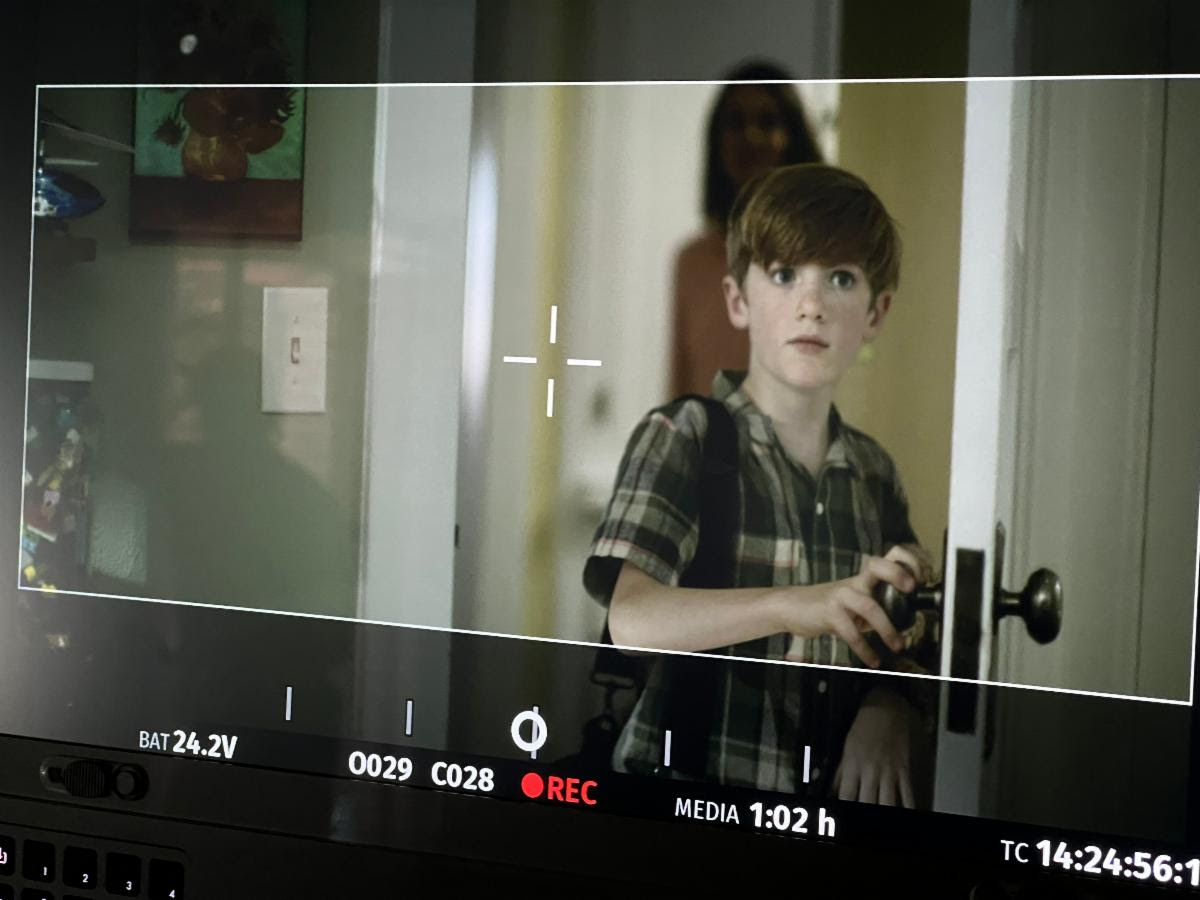
My son Jack had booked nine commercials that aired on television by the time he was ten, plus a stack that ran online. His name is on the building, and I want to be clear about what that bought him: nothing in the audition room. The bookings are his, earned with work, discipline, and a willingness to fail and go again. After the latest one I pulled him aside and asked him to explain auditioning to me the way he’d explain it to a friend his age. What follows is his, in his words. Mine come after.
How do you audition for a movie or a commercial as a kid?
The same way an adult does, with a shorter attention span and less to lose. If there’s a script, start memorizing at least two days out. If there isn’t, practice the thing they’ll ask you to do until you can see it. Walk in, do your best, and know that who gets the part is decided by things you can’t control. The kids who book are the ones who trained before the audition and enjoyed themselves during it. There’s no trick, and there’s no age where the trick starts working.
Jack’s seven tips, at ten years old
I asked how he prepares. He said it depends on whether there’s a script.
- Script. “If there’s a script, you should start memorizing it at least two days before the audition. Don’t wait, or it gets harder.”
- No script. “If there’s no lines to learn, then you practice performing what they want to see you do. It might not take as much time, but it’s still important.”
- See it. “Let’s say they want to see you hiking up a mountain. You need to be able to see the mountain and react to it, even though you’re just standing in place. You have to remember what hiking feels like. You might stumble. Just try to make it as real as possible.”
- Do your best. “No one is perfect. I’ve learned that there are things you can’t control about who gets the part in the end. So focus on just trying to do the best at what you can do.”
- Focus on good things. “My dad always says, focus on the good and good things will happen. It helps if you imagine yourself doing a really good job.”
- Be creative. “You get to be creative. You get to try your best no matter what.”
- Enjoy the new people. “You get to work with new actors and try out new characters. I also like using improv space work.”
His favorite jobs, for the record: one he filmed with his mom, his dad and his sister, and one with a very good dog. His dream job was LEGOLAND or Disneyland. He is fourteen now, and he runs the cameras in our classes, which is its own kind of audition every week.
What I’d tell his parents, which means what I’d tell me
Here’s the part I’m not good at. When my kid has an audition, I want to coach him in the car on the way there, and every time I do it I make him worse. What he needs from me on audition day is a ride, a snack, and the sense that nothing at home changes whether he books it or not. The coaching happens in class, on a Wednesday, with someone who isn’t his dad. I know this and I still get it wrong.
So here’s a small test you can run tonight, with no adjective attached and no predicted result. Ask your kid to make you a sandwich with no sandwich. Just the motions, at the counter, with nothing there. Watch how much of it they can see. Whatever you notice, that’s where the training would start, and it’s the same thing Jack calls seeing the mountain.
How does a kid become an actor in the first place?
A class first, before an agent, before a headshot, before a single audition. Then local auditions for everything small: student films, industrials, the community theater. Then, once there’s something on a résumé, an agent, and in Arizona there are six good ones. And a warning I put in my book because I mean it: if a school is aiming to make your kid better, that’s a good sign. If a school is promising to make your kid famous, that’s a bad sign, and it’s your money they’re after. Nobody here will promise you a booking. We’ll promise the training, and the rest is Jack’s tip number four.
The kids’ classes at the studio are Kid Improv and Kid Script, ages 5 to 11, the same curriculum the teens and adults train on. The space work Jack likes so much is a Wednesday afternoon.
Free from the studio
Written in 2020 for Sofia Wylie’s book and never published. For young actors and their parents.
Your next step
Every kid who books trained first.
Kid Improv and Kid Script, ages 5 to 11, in Phoenix, on the same curriculum the teens and adults train on. Listening, confidence and play, on camera every week.
See the kid classes All classes, ages 5 and up