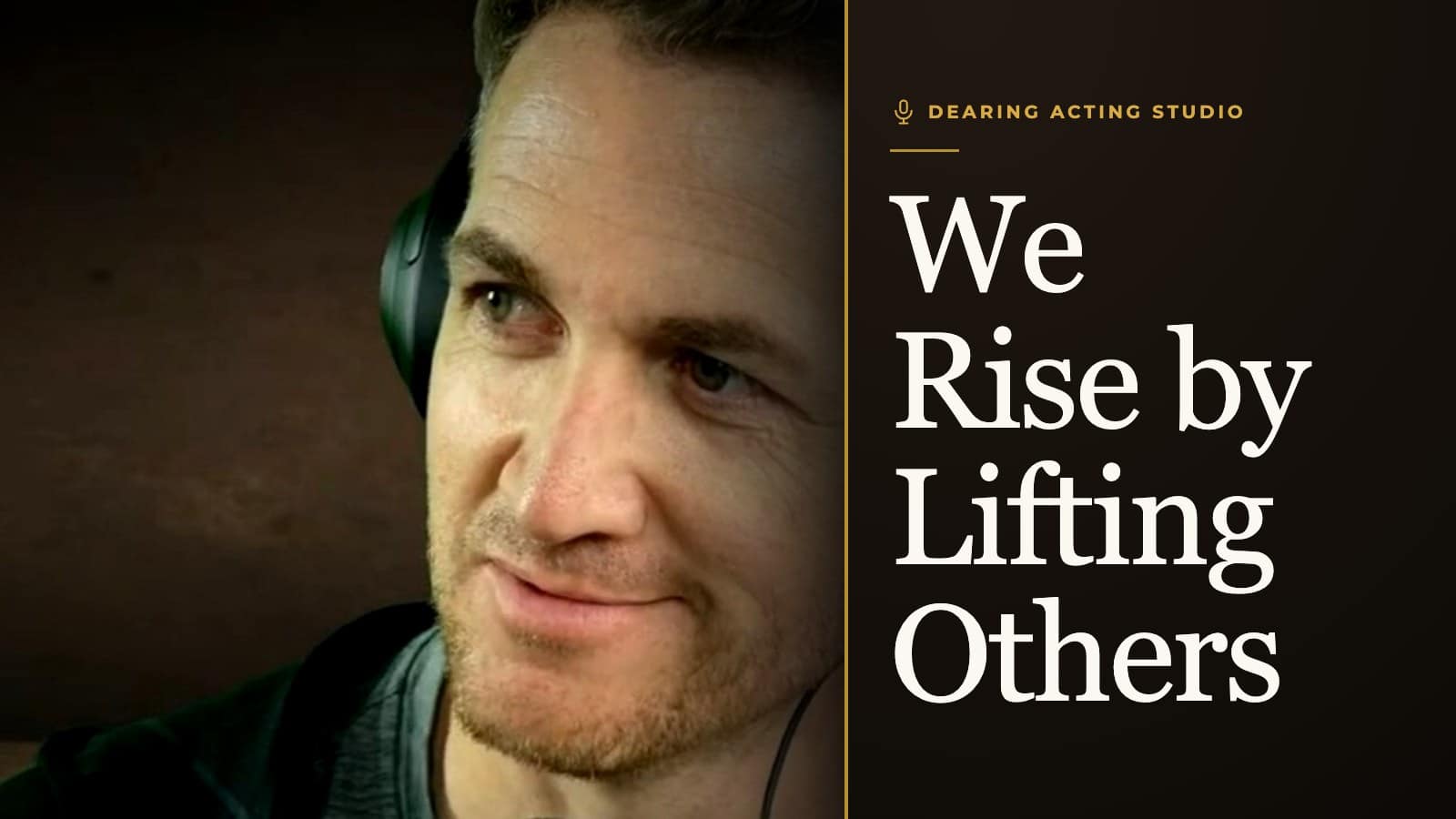
Two verses to open. Goliath looked at David and disdained him, because he was only a youth; that was the giant’s mistake. And the disciples tried to keep the children away from Jesus, and he said let them come, they belong at the front of the line. Then a guest who lives it: Dr. Layla Hyshaw, a pediatric dentist for twenty years, an author, and the mother of a child actor who has trained with us, on what it actually takes from the parent. Brian was out, so it’s Joey and me.
How do you lift up the young people around you, and what do you get back?
By deciding they’re worth your time before they can pay it back, and then letting go a little sooner than feels comfortable. True leaders don’t create followers, they create leaders, and the proof in my house is that for three months my toddler preferred his big brother to me, because Jack does everything with him that I used to do with Jack. Trusting someone younger is hard: a little more rope each Christmas until the year I sent my eight-year-old onto the roof to hang the lights by himself and walked inside. He did a beautiful job. What you get back is the second half: we rise by lifting others, and if you’re humble enough you learn from them, whether it’s a kid who knows Orion’s belt or one who thinks picking up dog poop is an Easter egg hunt. This week’s challenge: learn one thing from someone younger, and teach one person the difference between a job done and a job well done.
What is in the episode
- 00:10 · He was but a youth. 1 Samuel 17:42 and Matthew 19:13. Underestimating a kid was Goliath’s downfall, and the disciples had it backwards.
- 04:44 · Dr. Layla Hyshaw. Twenty years of pediatric dentistry, the hardest conversation in her practice, and why she wrote Cavity Free Kids for parents fighting the same nightly fight she is.
- 09:19 · A cavity-free life. What I heard: it starts from the inside out, and the same task is a chore or a game depending on how you present it. The toddler and the poop hunt.
- 12:19 · Mirror it. Kids copy what they see. Brush in front of them, give them a turn, keep your own brush for the real job, and don’t make bedtime brushing a battle you lose.
- 17:00 · The parent of a child actor. The second most common question she gets after cavities. Seven years in: it’s a marathon, the training is on the parent too, and there’s no Nickelodeon shortcut.
- 20:01 · There’s no downside to training. All you’re doing is inspiring confidence. And it’s not always the outgoing kid who makes it; sometimes the shy one laps everybody in three years.
- 26:15 · True leaders create leaders. Three months when my youngest preferred his big brother. Guilt, then pride: I’d created a little leader who carries my traditions down.
- 29:15 · Worth my time before they’re worth my time. Investing in someone who might leave, and why teaching makes you smarter: learn it, do it, teach it, know it.
- 32:19 · We rise by lifting others. Robert Ingersoll. Lift someone until they’re better than you at the thing, and don’t get jealous; find the next person.
- 36:53 · The roof. Six years of Christmas lights with Jack, a little more rope each year, and the year I sent him up alone and told his mother afterward.
- 39:55 · Every time you lift someone, you rise. And Joey’s timeout: do it for the wrong reasons and you go down with their weight. The years I hired people so I could go home.
- 46:11 · The challenge. Find someone younger, in years or in knowledge, and learn from them this week. Then teach someone a task properly, with them, until they know a job well done from a job done.
- 47:42 · Orion’s belt. A homeschooled kid on a bike ride at night, and the thing I actually didn’t know.
- 53:58 · My mom and the new phone. The teacher appears when the student is ready. She stopped saying my brain doesn’t work, Googled it, and set the phone up herself.
What this has to do with the class
Every kid who walks into Kid Improv is being told, by the room, that they’re worth the time. Some of them are shy enough that they can’t speak in front of the group on day one, and a year later they’re leading the game. That’s what lifting a kid up looks like at 4:30 on a Wednesday, and the parents who watch it learn something too. Dr. Hyshaw’s book is at themommydentist.com.
Full transcript
9,748 words, transcribed from the recording on this side of the desk. Names corrected. Part of the recording is left out of the written version.
Read the whole conversation
Layla Hyshaw, who is an author, she's a speaker, she's got all these credentials, so we're going to get to her in a minute. So before we do that, we're going to dive right into our daily devotional. So I've got 1 Samuel 17, 42. It says, and when the Philistine looked and saw David, he disdained him, for he was but a youth, ruddy and handsome in appearance. He looked at this kid, this big old giant Philistine, he looked at this kid, he's like, you're a kid. You got nothing on me. He gave him zero respect. It's a huge mistake to underestimate children, to underestimate kids or youth. And that was Goliath's big downfall.
Totally. Yeah, I mean, you've talked about a bunch on this show, but just how much you learn from your kids every single day. Totally. And the willingness to do so has made you smarter, stronger, strengthened your relationship with them. All of that is included. And youth in general, it means somebody that's younger than you, that maybe honestly doesn't have as much life experience. Like I look at, I feel like I did the same thing with you, Joey. I looked at you, I saw you in your youthful self. And rather than focusing on what you didn't know and the fact that you were young and immature, I focused on the untapped potential of what you could possibly become and was like, hey, you want to be a part of this? Let's roll.
Yeah, a hundred percent. And thank you. But you know what? I mean, that's a choice though, right? It's a choice and it's something that's been paying off in spades for me, which we're going to talk about at the end of the show. All right. Our next Bible verse here is Matthew 19, 13 to 15. Okay. And it says, let me get my glasses back on. I do this. I put the glasses on, I take them off.
All right. The children were brought to him that he might lay his hands on them and pray. The disciples rebuked the people, but Jesus said, let the children come to me and do not hinder them for such belongs the kingdom of heaven. And he laid his hands on them and went away. So, I mean, Jesus straight up. Yeah. You know what I'm saying? Yeah. He does the opposite.
But what do the disciples say? See, this is the interesting thing. It comes back to what I was saying about you. The disciples look at the youth. They look at the kids and they're like, hey, don't be annoying. Don't be kid. Like kids, you can't get near God. Like you can't come near our guy. Like he's, he's a big deal. And Jesus is like, no, no, no. They're the most important.
Yeah. Like they need to be in the front of the line. You guys got it all backwards. Yeah. And Jesus is like, we're going to talk about that later too. When you all are asking me who's going to be the, who's the most important among you guys. But for now, just understand it's the littlest one is, is the most important. Yeah. Well, and it goes back to this idea of what are, um, kids, what are youth and they're the next generation, the people who shape everything. So if, if they got their way and push them all out, right, they don't know God, you know, in a time where he's around, they don't get to know him. Um, that's a hindrance to what the world could be because somebody is holding them back from that truth. Yeah. You know, a hundred percent. Okay. So here's our show today. We're going to open up with our guest in the first segment. Um, we're going to discuss with her, uh, dental hygiene.
And, uh, and I want to talk about a cavity free, uh, uh, life. I think that's, that's a really cool idea. Um, and, and also we'll, we'll touch on the idea of being the parent of a child actor. Cause, cause she is that, um, our second segment, we're going to come back and discuss the importance of empowering youth. We're going to get back to that. And then our final takeaway is how, uh, we can then in return gain value from our dedication to empowering others and what we can learn from youth. If we're willing to be humble and listen, it's a big deal. Yeah. See the Philistine, he wasn't humble. No, you gotta be humble. All right. So ladies and gentlemen, here we go. We're going to get right into our guests here in a segment one. We've got Dr. Layla. Hi, Shaw. She's a doctor.
She's an author. She's a speaker. She's a dentist. She does a lot of things and she wrote a book and I'm very excited to talk about it because I am a dad myself. I've got, I've got, uh, three kids and another one on the way. So ladies and gentlemen, big round of applause, please, for our guest, Dr. Layla Hi, Shaw. Good morning, Nick. Good morning, Joey. Good morning, everyone. Thank you for having me on.
Good morning, Layla Hyshaw. How would you like me to refer to you? Layla Hyshaw. Oh, that's fine. Everything's fine. Everything, like Layla, I just Layla. Mommy Dentist, Mama Dur, I have a lot of titles. I love it. All right. So let's, let's, uh, jump right in first of all to, to your book. Um, what, what's the name of the book here and how can we get to it? Yeah, well, I have it. This is Kelly. There you go. And I tell you, I, I wrote it one, just being a mother, um, and being mother for over almost 16 years. Now my oldest is almost 17, but I've been practicing pediatric dentistry for the past two decades, 20 years.
And I will tell you the hardest thing in my practice is when I have to look a parent in the eye and, and tell them that their child has a cavity, multiple cavities, or maybe a full mouth that needs to be kind of restored. And what's sad about it is that this can be prevented. And, um, I really want to take just my knowledge and experience and clinical experience coupled with my life experiences. Cause I know the daily challenge I tell parents every day, I said, I am fighting the same fight about kids sneaking in some snacks, maybe saying they brushed their teeth, but they didn't, I don't know, last time they floss, you know, I'm dealing with all that too, but just to equip them with the tools they need on how they could keep the kids cavity free. Because it really is, it's just the way we look at diet, of course, how we look at hygiene and just really building these habits when they're young so that they grow up with the right habits to stay cavity free as an adult.
I love that. You are amazing. I can speak firsthand that I made all the wrong decisions and it wasn't until about a year and a half ago when I was blessed with, uh, dentistry and an orthodontist. And, um, it really does pay such a huge dividend on your health. Um, you know, oral health is, is connected to your overall health as a dentist, really as a dentist, um, immunocompromised medical conditions. So it's really important for parents to just understand that, um, it's not just in their teeth clean. And also the, the myth that they're just baby teeth, you know, our baby teeth, the baby molars stay in the kid's mouth till they're between the ages of 10 and 12 years of age. So we're not getting to the parents early to educate them about, you know, putting them to bed with a baby bottle. Um, the dangers of gummy vitamins. If you don't get those brushed out very well, juice, you know, drinking juice all the time, just the acidity of the juice and how it causes decay between the teeth, if we're not teaching them that early, then the kids are presenting to us when they're in pain, when they're have facial swelling, um, chronic pain that doesn't allow them to really concentrate in school, affects their performance in school. And then of course, they're just their confidence. So we don't want to come, we don't want to see them when we're at that stage. We want to get them early at their first birthday is what's the recommended by the American Dental Association and the American Academy of Pediatrics. So that's the, um, Academy of our pediatricians that we see your child by their first birthday. No, we don't expect them to sit in the chair. There's a way for you to hold them in your lap and their head comes back so we can look.
But at that appointment, we're really talking about all these measures that we can do to prevent them. I can talk to them about, you know, watch out with those goldfish cheesy crackers as naturally become toddlers because they're just a processed refined carb that's just stuck in the grooves. And, you know, if you look in the mouth three hours later, it's still orange sitting on top of the teeth. And so those carbs, they, they break down the sugars and the sugar bugs, they don't discriminate. They like any kind of sugar source. It's the by-product. It's the by-product that's the acid and the acid cause of cavities. So just having a chance to talk to them about that.
We also talk a lot about, um, what to do in the case of an emergency. And that's another big part of the book that I included a whole chapter on common dental emergencies and how to handle that. I I'll tell you, um, time is of the essence for some emergencies. So when your child is experienced a dental trauma, fell off the slide or got hit by a bat, a t-ball, that is not the time you need to find a dentist. You want to have your dentist that you can call immediately and they can get you in or even on call for patients after hours. So I just want to reframe just what it is to see a dentist, uh, early, a pediatric dentist early.
All right. So this is great. And this, and this, and this, this flows right into what I want to talk about, which was the, the idea of a cavity free life, which I think is kind of cool. Cause a lot of our audience here, we do have some parents, but a lot of our audience is going to be, um, you know, are maybe don't have kids or, or they're looking at how this applies to them as well.
And, and I want to, I want to just clarify some of what we've heard here so far. So the, the, the hygiene, the, the out product of good oral health starts from the inside out, starts from your stomach, starts from what we put in our bodies. That's, that's the first thing I heard. Um, another thing I want to ask the doctor about here, this is something I believe in very much.
So, uh, so I believe in everything that you do, it's all about how you look at it. And so, so if I take, for instance, um, some sort of work that I have to do, and let's just say for right now, it's, uh, brushing the teeth. Well, if I look at it like, oh, I have to brush my teeth or I have to floss versus if I look at it as, oh, this is, this is me looking more beautiful. This is me, uh, preventing huge expenses in the future. Like what, if you look at it a different way and present it a different way, then all of a sudden the same task that used to be something you, you don't like or don't look forward to, you can actually look forward to it. And then, and then I want to apply this to youth here for a second, because the way, the way we can like impact our children, we can have the same impact on our own minds. We just have to find a way to trick ourselves. So, so here's my example. Okay. Um, my, my toddler, he can barely, he can, well, not barely, he can walk. He's, uh, he's two years old now and, uh, he's, he's running, running around the backyard and he loves, loves picking up the poop. It's like his favorite thing to do because for him picking up the poop, I mean, I'm the one that does it. I use the shovel. I pick up the poop, but he thinks of it like an Easter egg hunt. So he runs around. He's like, there's one, there's one. And it's like, it's fun for him.
So now it's become fun for me because I enjoy spending time with my children. And I want, I love, it's so funny to me how excited he gets about picking up the poop. It's hilarious. So this like terrible mundane task has become fun and has always been fun for him because I never presented it as you have to do it. I presented it as, Hey, you want to go play the game? Right?
So, so now the same toddler, um, he's got his own toothbrush and he's had a toothbrush since he could barely hold one. Well, he plays with it. He likes it. He enjoys it. He sees dad do it. He sees older brother do it. Like, like for him, it's a game and it's something that he feels left out if he doesn't get to do it. He, and so well before he needed it, when he just had gums and he just kind of like playing with it and spitting on it and stuff, it became something that was like a prize and something that he got to have. He was a big boy enough to get to have a toothbrush. So that the mindset there is like, Oh, I get to do this at the end of the night, not night, not I have to. So if we can put that, that perspective on ourselves as well, um, and think about how we can teach our children, that's something that can have a huge impact. So I wonder, I'm sure that's probably something in the book. Yeah. That's such a great, great example. And also too, you're mirroring for him, everything, right? You know, our kids look up to us. Um, now mine are teens and I hope they still back and forth.
I so wish I had learned the poop pickup game because literally yesterday I was fussing at them. Like, will you please just take off the poop game? I should have talked to you back. It's an Easter egg hunt. That's what it is. But yeah, you know, and that's why it is coming on us as parents for us, for them to see us doing it. Yeah. You know, how is it where they want to help you sweep or vacuum because you're doing it.
But when you're brushing, I say, have them in the bathroom with you. Have a sense, you know, a few toothbrushes. Um, so they can see you brushing, then they want to see, um, following what you're doing as you're flossing, then they will. And, and when, when I say when they're younger, let them have some autonomy, let them have a turn brushing their teeth and flossing. They're not doing a great job. They really don't have the manual dexterity till they're about six years old. You know, used to be, we would say until they can tie a bow in their shoe, tie their shoes, then they're able to brush on their own. But now there's old shoes. Right. But really then, then after they get the turns and it's mommy or daddy's turn, dad's turn. And also one little pro tip, let them always have their toothbrush. Cause yeah, they do not, they flare the bristles. So that's kind of damaging to the gums and they're not going to get efficient cleaning. So you have your toothbrush for them in your bathroom that you're going to brush for them. Yeah. So, okay. That's a good idea.
And then your parent has a turn and there's a thing I'm picking battles. And I remember my kids when they're little, especially Hayden, the one who's the child actor, who like, I mean, the outfit she would put together, you know, sometimes the, the, the ski boots with a, a, a tutu and a glitter top, you know? And I was like, okay, whatever. You win. Go ahead and wear that. Yeah.
But I'm going to let her have that. I'm not going to let her choose the battle on if she's going to brush or not. So, um, in the morning I'll let them do it first and then we do a quick one. But the nighttime guys, parents is the most important time to really get in and get a good tooth brushing. So they're going to kick, scream, cry, you know, fuss, just keep at it.
But at the, before bedtime, we want to get all the sugar source off the teeth. Um, we want to floss between, um, just so that there's no chance for those bacteria bugs. I call them sugar bugs in the practice so that they're not having a picnic on the teeth while they're sleeping. And it becomes a part of the routine. It doesn't have to be a big thing. Oh, okay. Okay. Let's not forget to brush our teeth is do they go and have bath time and then we're gonna brush and then it's time to read our story. You know, it's all part of the nighttime routine. Layla Hyshaw, I've got a question for you.
What about mouthwash? Oh, you know, I get that a lot. And here's my thing on mouthwash. Um, it's not that important, but, but is it, is it bad? Is it bad for you at all? No, no. For kids, I use an alcohol-free mouthwash that do go for the children. Um, but, uh, the mouthwashes that say that they kind of show plaque first so that you can see that your brushing really hasn't shown to be clinically effective. I worry about a kiddo that has so many steps that he's going to maybe skip out on the flossing because they, they brush and then they rinse and like, Oh, I rinse. I should be good enough. I'm actually just talking about me here. Matt, instead use that time to brush your tongue.
So instead of mouth rinsing, brush the tongue. Well, no. So I, so I do that. I do that, but I just like mouthwash. I like it throughout the day. I like it after I have a cup of coffee. Like I like to feel like I've got a fresh mouth. So I've got my routine beginning and end of day. I just didn't know if like right after you brushed and you've done all your work, if you use mouthwash, if that's something that could affect you negatively necessarily when your mouth is sort of exposed from the brushing. Okay. Yeah. All right. Good. Sometimes you can kind of mix, mix up the flora with a really strong alcohol based type, um, mouth rinse. So she thought I was worried about the kids. I was totally just worried about me. All right. So before we go to our commercial break, I want to jump really quick into, uh, you talked about your, your daughter Hayden.
Let's talk about you being a parent to a child actor and, um, and some of the truths around that. Well, thank you. And thank you for giving Hayden some great experiences when she's come in, uh, you know, especially with auditioning. I tell you when parents ask me, I guess besides, you know, how do I keep my kid cavity free? The second most common question I get is like, how do I get my kid into acting? And I always warn them. I'm like, just know what you're getting yourself into. Of course it's great. You know, you can kind of pick up on that your child loves to, you know, when they're younger is more about, do they like to be outgoing and express themselves? And just like any other extracurricular, uh, you have to spend the time to invest in them, the training, the practice. You cannot just say, I'm going to be a child actor. I'm going to get my kid in acting and they're going to be on Nickelodeon. We've been at this game for about seven years now. Oh my gosh. That's been, yeah. And, um, and it is a slow process. Remember, I know you guys talk about it. It's not a race.
It's part of the marathon as a journey is, and you're learning as you go, but parents is as much of a responsibility on you. There are times I'm at the practice and I'll get, you know, I had to put the alert on the notification for the C-mails from Actors Access. Cause you know, those agents want to know right away if you got it. Um, and then I got to go into a flurry of, okay, who is she going to coach with? What time is, uh, school getting out? Does she have dance today? Or I'm going to have to reschedule a dance. Then we're going to have to get that coaching in, make sure she goes over her sides. Um, and you know, now that we're kind of taping more before COVID when we're here in Tucson, Arizona, and she needed to get to California, got to call my sister who was going to meet her at the airport and get a flight. Yeah. Yeah.
But I will tell, I just want to say she loves it. We do it. Um, but it is a time commitment and you have to, you have to put in the time and effort to really get good training. You guys offer it there in studio. Um, you have to do workshops. You just really have to hone the craft. It is a muscle. And, um, if you have a young child, they're not going to know all this stuff right away. So it is incumbent on the parent to really do their research. Um, even when looking for representation locally, she's represented as signature models, uh, model and talent. And, um, you know, she has a manager.
So there's a lot of things. It's a whole field that you have to learn about. It's a whole new profession. Yeah. Yeah. A hundred percent. And, and on top of that, I'm going to say pro tip too for parents. Um, there's no downside to acting classes. There's no downside to training because all you're doing is inspiring confidence. That's it. So first and foremost, like this is true. If you want to be professional, because think about it, if you want to be professional in anything, you just take any kid profession and be like, all right, how's my kid going to be a professional pianist? Okay. It's going to take a lot of work clearly. And there's going to be a lot of work for the kid and for me, and they got to be dedicated, et cetera, et cetera. Um, having said that it doesn't even need to be that big of a thing to get started. You just have to be realistic and understand what you put into it is what you're going to get out of it, period. And there's going to be good things that come just from, just from consistently going. That's great. And then it's like, all right, then you'll start to see for your child, for each individual, how much do they really, really want this? And I can always tell who's going to make it and who isn't based on who does the work, like who shows up, who's like so excited, who's dedicated. And it's not always the kid that you'd expect. It's not always the outgoing kid. It's not always the kid that wants to express themselves. Sometimes it's the shy kid that comes in, but they just love it. They're dedicated to the craft. And before you know it, three, four years go by and they're now lapping the other kids.
So, um, very cool stuff. It's a journey that they go through on that too. Absolutely. All right, Dr. Hyshaw, we're going to wrap it here on this first segment. Do you have any, um, any, any last takeaways you want to, you want to throw our way? I was just going to let you know that you can find the book and free resources. There's seven, uh, there's free pictures, videos, resources. You can download on themommydentist.com.
Nice website. So that's themommydentist.com and you can order the book from there as well. It's on Amazon, Amazon bestseller. Yay. There we go. Cavity free kids, Amazon, Amazon bestseller. You can find it at, um, one more time. The mommy dentist. Is that right? Yep. Themommydentist.com. That's a, that's a great website. I love it. Themommydentist.com. Yeah. All right, everybody, we're going to come back for our second segment here in a minute. We're going to be talking about empowering youth. We'll be right back.
Astrid Gabriel, Sia Luke, Vicky Sweeney, Brian Sweeney, Matthew Dearing, and Joey Sweeney. All right, welcome back, everybody. We are talking about empowering youth here in our second segment. That was a great segment with Layla Hyshaw, I don't you agree, Joey? Yeah, yeah. She was awesome. I'm going to give her another big round of applause. Writing a book about helping kids not have cavities and living a cavity-free life.
All right, so what does it mean to empower youth? We talked a little bit about this in our Bible verses up top here. We've got another quote here. This one, this is one of those, I've got a bunch of quotes actually, but this one, this was from one of those anonymous sources. It says, true leaders don't create followers, they create more leaders. True leaders don't create followers, they create more leaders.
Dang. I believe in this. I believe in this concept so badly. You know what's, yeah, I'll tell you something that's, that's, this is a little admission of guilt here, and also at this, and also at the same time, an admission of awesomeness. Simultaneously. I'm sitting on the, I feel like, I feel like I give that to you all the time, where I'll be like, hey, I'm going to give you like a compliment, but also like a lesson. So I'm going to give the things I've had that have been issues with that, there are things that I've wanted to do with my littlest son that I haven't been able to do physically. That normally would be no big deal, but I just can't do it right now. Um, and what's interesting is I, my eldest son, Jack, does those things with my little one. And there was a, there was a period of time, it was probably about three months worth of the littlest guy's life where literally he preferred his older brother to his dad. You know, it'd be like, he'd come home and I, and I'd be like, arms out. And Jack would be like, arms out. He'd look at me and just go right around me and go to Jack. And I, I remember thinking to myself, God, bummer. But actually like that, that's the guilt.
The truth was I did realize, and I was proud and I was excited that I created a little leader. I created somebody that's taking care of the next generation. Yeah. And, and of course this has paid off so many, many, many, many times when we needed Jack to watch his little brother or do something or whatever has been amazing. And so he's very responsible, but not only that, but he's playful and he's created his own like traditions. And I watch him do the traditions, the same things that I used to do with him. So what I've done is I've created a little leader, which is amazing. Yeah. And he remembers the memories you have and the things you taught him.
And now he gets to share that with Finn, which is really cool too. Right. And my daughter does the same thing. She plays the game. She plays all of her, her, her different games that she loves to play with the littlest, you know, like she drives him around in her little new car that she's got. She plays dolls with him. She does, she does all kinds of different fun things that he loves to do that a lot of them, my wife taught her how to do. Well, now she's the one sort of reciprocating down to our littlest. It's very, very cool.
So this idea of creating leaders, it starts from a humility and a willingness to decide, Hey, you're worth my time right now when you're kind of not worth my time. Yeah. Make sense. No, a hundred percent. Yeah. I mean, it's like a project. It's like starting a project. That's right. I'm going to invest in you and I may not get a payback. Cause, cause let's just say even at work here, like I may invest in somebody and then they just leave. It happens all the time.
So then it's like, you know, I'm talking about students. I'm talking about, you know, past employees and stuff. You invest a ton of time and effort into somebody and then they leave. Right. And it's like, Oh, but, but here's the thing that you got to remember is you're leaving this lasting impact on somebody. And while they were still with you, there was so much that was a reciprocal experience that happened. And of course, when you teach somebody, you become smarter.
That's the other thing that's very important. Yeah. To, uh, what, gosh, what's that great? You'll know it. The, the saying like to teach, um, to do is to know and to teach is to. Yeah. Yeah. Yeah. So basically it's like, uh, um, learn it, do it, teach it, know it. Yeah. So you can learn something, but then you gotta be able to do it. So if I just learned it from you doesn't mean I can do it actually. And then, and I've actually caught you a few times on this where you've taught me, I learned it, but then I'll be like, dude, I still don't know how to do it just cause you taught, I get you taught me, but that particular task had too many, too many elements involved for you to expect me to know how to just do it.
Yeah. You know? So a good teacher has to go, okay, let me teach you, but let me teach you in such a way that it, that it forces you to do. And I watch you do, you do in front of me enough times that I get it. Like you can do that. Yeah. And it goes back to that whole idea of like, it, am I going to put in the time for this? Right. Cause that's, that's kind of what, um, my downfall is, is I forget that not everybody knows some things that I know. So when they ask me, I just go, oh yeah, this super easy, like that, cause it is for me not realizing that like, oh, Hey, that's not easy for everybody.
But then you have to realize too, every time you answer that question, how many times am I going to have to answer that question from that person? Right. So, so it depends on the person and how, and their, and their impact on your life. But sometimes you just do it for them. Sometimes you'll show them and sometimes it's worth it for you to do, to teach somebody.
Yeah. Right. And that's why teachers get paid. That's, that's why like a teacher would get paid or we get paid to do what we do to, you know, to impart our knowledge onto somebody. Knowledge. All right. The next thing here, the next quote I've got is from Robert Ingersoll. It says, rise by lifting others. We rise by lifting others. I, I just love this. I mean, this is, this is sort of like the cornerstone of personal development, which, you know, I, I just love and, and live by, but this idea of you're only going to rise as high as you're willing to help others rise. And I see it as like, like a lifting tide. And sometimes, you know, it's, it's very hard. You have to be like, like take this, this example I gave of Jack. Um, sometimes you lift somebody up and then they're doing what you used to do better than you do it.
And you cannot get jealous. It's hard sometimes, but you cannot fall into that trap. You have to look for the next person, lift the next person up. Or ideally you've trained that person to the point that they start lifting up other people. And then you're excited about that. And if you're excited about it and you're encouraging and you're loving, there's a good chance, not a guarantee, but there's a good chance that they're going to reach back and, and in such a way that they are grateful to you and at least mention you to the, all the people that they're coaching. So let's just say you lift somebody else up and then they start helping other people. Then they go back and they're like, they're like, how'd you learn so much? And like, oh, I learned from this guy over here. He was great. You know, and, and that's how, you know, things spread and grow. Well, as soon as you get jealous though, that that's not going to work. So for instance, if I was at, let's say I'm an actor, which I am, and then I coach all their actors. Um, and then, and then I coach an actor and then that actor rises to, to do more things, better things, bigger things, even becomes a better actor than I am.
I cannot be jealous of that person. I have to be excited for that person. I have to root for that person. I have to encourage that person, even if they're in my demographic. Yeah. And you do. I mean, that's one of the things I've pointed out time and time again. It's like, it's crazy, but the way that you are so truthful when you talk about, oh, if somebody, it like, I would, if I coach somebody and they get the gig, I'm almost happier than if I got it myself or I am happier than if I got it myself, whether I'm running against them or not, because I don't, I'm not scared of helping somebody. Right. Yeah. It's funny. The only fear I get during coaching is, is their performance because I'm so invested in them winning that it's like, I get nervous for them. Yeah. Like almost as if it's me on the stage or me in the, in the show or whatever.
Like if I coach someone and then we're going to go to their premiere, I'm like, Oh boy, I hope they look good, man. Cause I like, I hope the best for them. So Joey, this is another terrible illustration. It's a, it's a visual representation. Okay. For our, for our audience. And you see this arrow here, okay. Time now for Joey's terrible illustration. Listen, our visual learners need this. Okay. This arrow, you see this little guy. We need Rosalyn on the show. You need to whisper to Rosalyn, Hey Rosy, draw this for me. That way I can then demonstrate it. I mean, I'm down. I'm down. She's a way better artist. She'd be a great, but you see this little arrow, you know, it's, you can only go up as much as this, this guy's looked in this guy, you know? And if you drop it, it looks like a man throwing his kids up. Exactly. Right?
Yeah. It's like a rocket ship. Yeah. It's somebody smaller than you, not necessarily in size. Do they have to be smaller in size? No. No, it's like a metaphor. Oh. Smaller than you in some area. It's time now for Joey's horrible, terrible illustrations. All right. Thank you. I love it, Joey. It was really boosting my confidence. But I gotta tell you, that one though was, well, I could at least see it on the camera. The last couple were just. I've been, I've been trying. I think we need to get you a marker. Yeah. Maybe that's a good idea. And like a, and like a different sheet. You know, if you're going to do these kinds of things, I think we got to do this. All right. Here we go. Moving on here. Um, I wrote down a couple notes here. You will be successful by helping others. Facts. Facts. That's, that's pretty much it. We don't even need to speak on it. Guaranteed. You will be successful.
successful by helping others. All right. Trusting in someone younger can be difficult. Giving away your power can be difficult, but it will pay off in spades. Um, what do I mean by this? All right. Trusting someone that's younger at some point in time, let's just say you're teaching your kid how to hammer a nail. Okay. At some point in time, you got to let go of the day. There's a certain age where it's like, you got to let go. You got to trust. I did this this last year. My son, Jack, my eldest has been climbing up on the roof with me to do Christmas lights for the last six years in a row since he was two. Okay. Not to my wife's loving, but to his love. He loves it. We go up there and you know, the first year I'm like, you know, he was only up there for a couple seconds and I'm holding on to him. And then like, I let him like a little bit of rope, a little bit of rope, a little bit of rope until he's like six. And then I let him actually walk up and down by himself. Okay. Then he's seven.
He's kind of got a little bit of autonomy. He can do a couple of things. He's still got to like sit. Like I'm like, anytime I'm not looking at you sit. Okay. This year he's eight. Dang. And, and I walked inside. I told him, I said, Hey Jack, um, you can do this. Here's exactly how you stay safe. Let me show you. Here's how you put your weight. And I go, all right, so get these lights, start hanging them here to here. I need to go inside and grab something. I'll be right back. And I go inside and I, and I said to Leeann, my wife, I said, uh, yeah. So, uh, your eight year old son's on the roof by himself. She's like, what?
What? I said, we got to trust him. He can do it. And he did, by the way, he did a beautiful job. And then he took down the lights as well. And all of a sudden, you know, I've created a new leader, somebody who, or actually no, I created somebody who can do, I didn't create someone who can teach yet, but eventually his next step will be to teach the next, the next child to teach the next one about the same safety measures. And I want to watch him and I will teach him to teach them safety. So that'll, that'll cause me to be back on the roof, back saying, you should have told her to sit. You should have told her to do this.
There's a way that you keep others safe. There's a way that you make sure that they don't make mistakes. Remember when dad did that for you? So those are the, that's going to be the next step in that process. But this idea of trusting someone younger, trusting someone who knows less or whatever can be difficult because you got to eventually let go and let them make mistakes every now and then. Yeah, totally. I, uh, I hate to go backwards, but our, our viewers are very upset with your reaction to my drawing and I understand, you know what?
I love you and I give you the benefit of the doubt because your daughter is one of the best artists I've ever seen. It's time now for Joey Sweeney's terrible illustrations! And, uh, uh, hurtful, hurtful. But, um, Joanne said, I don't understand why Matt would ever say that. It's a terrible illusion. And then she did a bunch of these. A terrible illusion? Yeah. You mean illustration? Yeah, illustration. Um, Dakota said, I know, right, Joanne? Joey with the Picasso drawings. Pure art. Please invest in a drawing tablet for Joey on the show.
There you go. There you go. I endorse this. All right. Then, Joanne said, I could see what he was communicating. Yes, please. Very good. Very good. Very good. So, at least it's being received. Joey, I love it. I, I think we should have a segment called Joey Sweeney's terrible illustrations. All right. All right. I, what was the first thing I said? I'm like, we got to get you a marker. Like, I want to improve the process. We got to get you a marker so everybody can see your terrible illustration. Because actually, that's funny. And it's also like relevant. Like, I think it's cool to see a stick drawing. Like, it's like, it's all good.
What I didn't, what I didn't like, and this is why I brought it up. And I, and today it was better. But there were so many times when you would hold up a sheet of paper like this and like, you'd be like, look at the drawing. And like, because it was so light that you couldn't actually see what was on there. And I'm like, you know, it's terrible. It's a terrible illustration. I mean, that's fair. All right. Here we go. Let's finish up this here.
Sounds good. Every time you lift someone else up, you in turn then are lifting yourself up at the same time. This is, this is facts. And this is going to, this is, this sort of gets us going right into the next segment, which is learning from youth. So how empowering the youth is going to help us learn from youth. I have this time out. Okay. Okay. On that idea. If you do it for the wrong reasons, you will go down with their weight. You're so right. And I've got an example of that. I used to, in my younger years. Younger, when I was a youngster. Because, because I've, because I've owned a business now for a long time. Since 2007. People are always amazed. And they're like, hey, when did you start your business? And I'm like, 2007. They're like, oh, dang. I'm like, yeah. That's been a long time. It's been a, it's been a road. Uh, but there was a, there was a time when I had this perception of what it meant to be successful, what it meant to be a successful business person. So I was looking to hire and I was looking to teach others to teach, but it was more for the reason of me standing on top of an empire or me going home and not having to do the work. And I thought that that was, that was what success was. It was, it was this idea that was incorrect. So I had the wrong reasons behind doing what I was doing. I actually did an okay job doing it, but then every time I would do it, I would then step back. Cause that was my goal. And then everything would fall and everything would crumble because there was nobody anymore trying to inspire and lift up and trying to help the people that were actually running the company. Uh, duh. But, but I didn't even go to business school. Like I didn't know any of this stuff. So I just like, I thought like, oh, well, this is what success looks like. You hire three people, they do the thing, you go home and you drink a beer. I'm like, no, that's not how it works.
Negatory. So yeah, that's a very good point. Um, and, and, and, you know, so, so giving away your power, trusting somebody else, that's all great. But, but you're right, Joey, the why has got to be correct. What is your why? If your why is to help more people, to inspire more people, to continue to lift that person up, those are good whys. If your why is to go home and just sort of like, you know, toss one back, blow off the afternoon is not, not a great idea. All right, good. Um, are we ready to move on to the next segment or commercial break? Yeah. All right. So we're going to go to commercial break. We're going to come back, tell you about how you get to benefit, how you get to gain value from teaching others.
It's going to be. I thought you were on that diet, the cleansing. I am, and I need the coffee to help cleanse. Well, I mean, I thought all the things in coffee you were cleansing from, the caffeine and the sugar and the milk. The sugar, yes. The milk, yes. The caffeine, absolutely not. Let me explain All right, welcome back, everybody. We're going to end the show here.
We're going to bring up our takeaway and we're going to just talk about really briefly what you get to gain, what the value is from empowering the youth. Empowering the youth. Here's the big takeaway. Here's what I want everyone to do this week. Ooh, is this a challenge? It's a challenge. I think we can do this today. This could be a thing. It's very easy. Competitive. It will take some thought, but it's pretty easy.
So here's what I want you to do. I want you to find somebody younger than you. And it could be a toddler. It could be somebody that's younger than you in knowledge. So it literally could be somebody older in age, but younger than you in knowledge. Okay, so just somebody who's younger in some way, all right, and I want you to learn from them. I want you to ask questions or I want you to watch and observe and I want you to learn from them.
So, for instance, let's just say you see a child and the child is dancing freely in front of other people in such a way that you would never do. Watch them. Study them. Do it. Do what they're doing. Like, be willing to jump in and do that thing. I really wish Brian was here because I just love referencing the Sweener on this show. Yeah, so that would be an example of a way to learn from somebody, okay?
There's so many ways, but there's examples of learning from youth. I mean, this is so funny. My kid is a homeschool kid, which means he's smart. Smart as can be. He gets to learn from my wife, so it's like he's brilliant. Just want to let you know. I'm doing the hard stuff right now. And I get back and Jack just can't – he can't help him. So, he's like, Dad, the stars tonight. I'm like, yeah, they're great.
And he looks up and he's like, I think that's Orion's belt right there. Isn't that Orion's belt right there? And he's pointing it out and he's like, because of the belt. And he's like – and I was like, Jack, I actually have no idea. You're probably right, but I don't know where Orion's belt is or what it looks like. He's like, no, I think that is Orion's belt because if that's Orion's belt, then that means the little dipper should be right back over here.
Like, the kid knows his astronomy, like the back of his hand. And I'm like, I can learn from you. Yeah. And if I can take a time to humble myself, to listen, to ask questions, to be willing to learn, to want to learn, I can learn. So, there's so many examples of how you can learn. Okay. Then I want you to be willing to take the time and the effort to teach somebody something.
So, this could be simple too. Let's just say that your task is to mop the floor or clean the bathroom or something like that. And you're going to give that task to somebody else. Take the time to slow down and show them the proper way. To actually do it with them, but do it with them as they do it. Try to make the activity fun and try to help them understand the value of a job well done.
The difference between a job done and a job well done. Yeah. When you get to look back and go, I did that. Yeah. And you're excited and proud. Can you repeat the second step one more time? Yeah, second step. Just what is it? Sure, sure. So, the second step we're going to say here is that you're going to find somebody younger than you in some way. And you are going to teach that person.
You're going to, if they have a task or something that you've assigned to them, you're going to do it with them to the point that you are teaching along the way. Helping them really understand the whys behind what they're doing. And then ideally, when they're done, they understand the difference between a job done and a job well done. So, you'll have taught somebody. You'll have taken the time to really slow down and teach somebody a task.
It could be very simple. Like I said, it could be simple as mopping the floor. There's a right way. There's a wrong way. And then there's like a great way to do it. Okay? So, whatever you know, don't just allow somebody to do something and then make all the mistakes. Maybe take the time today to teach somebody and really slow it down. It could be – and ideally, you pick the right person who's going to super appreciate it too.
I mean that's always really nice. Yeah, for sure. Because then you feel rewarded for what you did. I know that's part of what you've had to go through as a leader is coping with and understanding that not everybody is going to be grateful for what you give them at all moments. So, you have to be careful for what you say and give to them at a time.
That's right. That's right. Yeah. Because people are – they say the student – the teacher will appear when the student is ready. Yeah. So, that means that the teacher shouldn't break down the door and start teaching because the student didn't appear. Facts. So, a lot of times you want to inspire people to ask questions as a teacher and then they will find their way to you. This is our daily challenge.
Um, uh, very good. Yes. Good. Yeah. It's time now for Joey Sweeney's daily challenge that he stands in front of and you cannot read. Very good. I – I just – Joey, that looks good, dude. Thanks. That's classy. That's why I had you repeat it. Bro, that's classy right there. Thanks, man. That's like a Joey Sweeney classiness. Thanks, man. I like the brick too. You got some good stuff going on.
Yeah, I mean, it's just a design template and then type it in, you know? Yeah, you make it sound simple, but it's a lot of steps, bro. It's a lot of steps I don't know and I'm appreciative. Oh, man. You taught me everything I know when it comes to spark and designing. I like just – I'm just going to end right now. We're going to end the show with a bunch of quotes that we didn't get to say out loud.
All right. Here we go. Anonymous. Motivate yourself to inspire others. Boom. Right? I mean, come on. Yeah. Motivate yourself to – come on. Motivate yourself to inspire others. That should be your goal. Very good. Never let your fear decide your fate. Yep, totally agree. This one's by Eleanor Roosevelt. You ever heard of her? Yeah. I mean, she was my wife probably in the last improv show. Oh, yes.
Yes, yes, yes. I'm like, wait. We never got there to the name. You said she was my wife and then long pause. Oh, yeah, yeah, yeah. And I'm like, well, what do you mean by that? Yeah, no. Because she's an old woman, bro. Yeah, yeah. All right. She says, the future belongs to those who believe in their dreams. It's juicy. I'll walk it, I'll walk it, I'll walk it.
All right. Very good. So here it is. Here's the end. This is the end of the show. You hang around young people, you're going to stay young. You be generous with your time and you be humble enough to learn and listen from others. And you're going to grow. You're going to expand. You're going to have friends. You're going to have people who want to be around you, who want to listen to you, who don't mind teaching you.
That's the other thing. I can't tell you. I just had a conversation with my mom about this just last night. And I said, you know, she's coming so far because it's so frustrating when you're trying to teach your mother something about, say, like technology or something like that. And then her response used to be, oh, but my brain, it's just my brain doesn't work, man. And I just can't because my brain doesn't work.
I'm like, mom, stop saying that. Yeah. Your brain works fine. Yeah. Your brain works fine. You just, you're, I understand you don't have the experience. That's cool. Stop saying you can't stop saying you're bad at technology. Just start saying you're on the path of learning technology and you're excited to be a part of that process. And then, so here's what's cool is last night for the very first time, my mother says, you know, I got a new phone.
Or I asked her about it. Did you get your new phone? She said, yeah, I got the new phone. And she's like, you know, it's, it's, but it didn't, it didn't come with its email on there. And it didn't come with like this other thing on there. It wasn't already on there. I was like, yeah, that's what happens. And she goes, Matt, Matt, Matt, no, no, no, no.
You'd be so proud of me. She's like, I did it. I got those things on there. And I didn't even have to call Apple support. She's like, it's just like you said. I just Googled it. I just took my, she's like, it took me a long time, but I got it done. I was like, mom, it's very good. It's very good. Very good. So you see, I taught my mom how to seek knowledge.
How to, because normally that'd be the question. She'd call me. I'm her tech support person, you know, and, and we would walk through this process. Well, she got it done by herself. It was very, very cool. I was very proud of my mother. Heck yeah. And I am. I said, she goes, Matt, you're going to be very proud of me. I'm like, mom, I'm already proud of you.
But why am I going to be more proud of you? That's what I said. Yeah. That's, that's cute. Did you really? I did. I swear to God. You can call my mom right now and ask her. That's exactly, well, she wouldn't be awake. I know she would be. My mom gets up early nowadays. Dude, I swear, you change your life. Quick 180. And the people around you change.
Yeah. It's a whole episode of it and of itself. This is facts. All right, Joey Sweeney, that's going to be our show. Ladies and gentlemen, thank you so much for tuning in. Thanks for hanging out with me and Joey and Dr. Layla Hyshaw. Had a great show. We missed Brian Sweeney. So he'll be back tomorrow. We'll see you guys. He's a special guest on Tuesday, Thursday, Saturday.
Saturday, yeah. Very good. Okay, we will see y'all tomorrow. Peace. Thanks for listening to Mornings with Matt. Please like, subscribe, and follow us at Dearing Acting Studio to keep up with the latest content. For more information on classes, private lessons, or professional development coaching, I meant to say, and God bless. Dearing day, everyone. Have a champy day, everyone. Ref.
Your next step
Where kids learn they're worth the time.
Kid Improv and Kid Script, ages 5 to 11, in Phoenix, on the same curriculum the teens and adults train on. Listening, confidence and play, on camera every week.
See the kid classes All classes, ages 5 and up