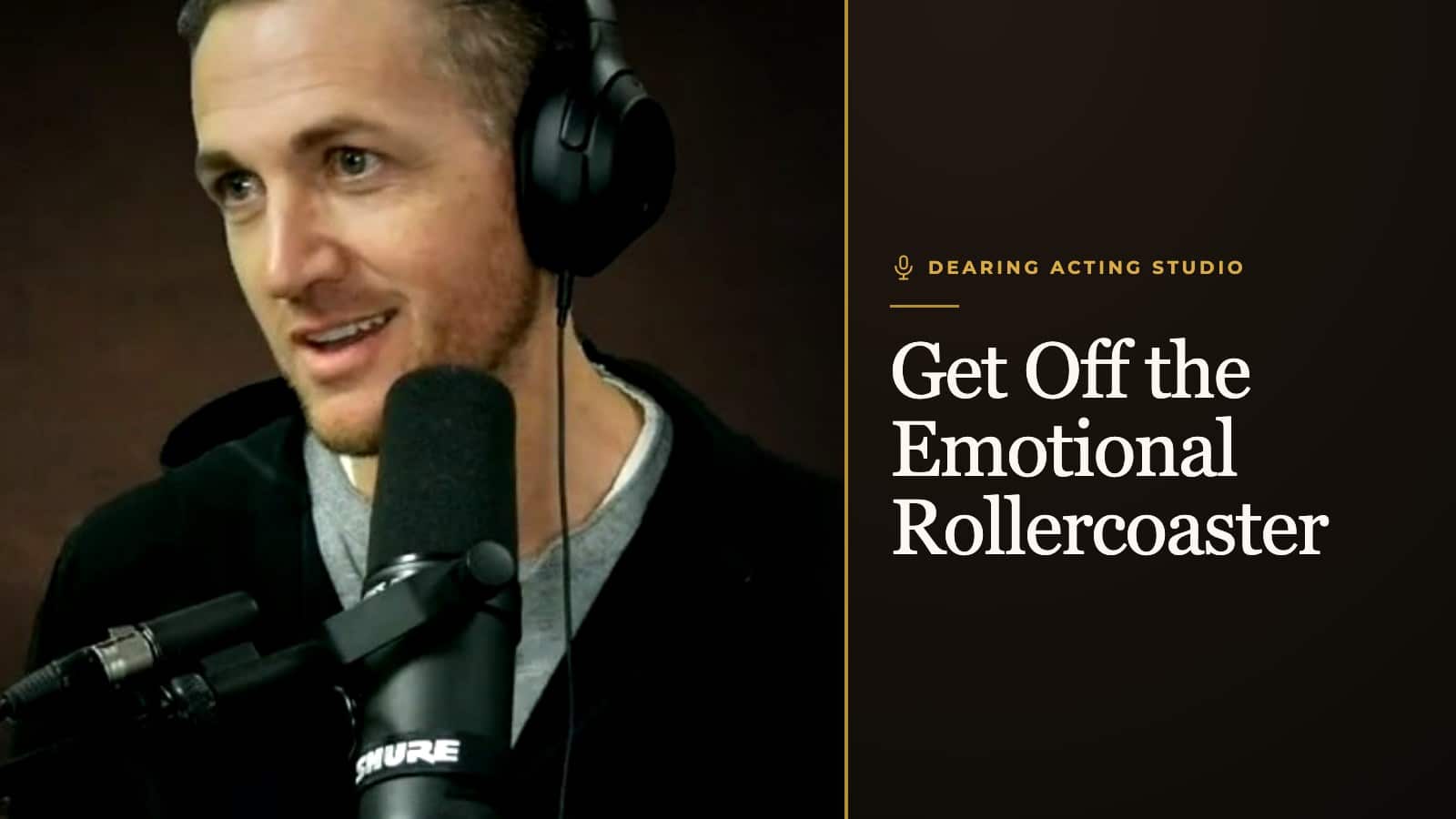
Season two of Mornings with Matt opened every show with a Bible verse and Brian reading it twice, once safely and once in his own voice. This one was Proverbs 27:19, face reflects face, the heart reflects the man, and the show that followed was about the heart: why the highs and lows wear you out, even the highs, and what to do about it. Leeann had asked me a question the night before that nobody had ever asked me, and I asked the boys the same thing on air.
How do you get off the emotional rollercoaster?
First, acknowledge the feeling. Most of us, asked what’s up, say nothing, I’m good, and we’re not good, and the denial is what keeps the ride going. Second, become an observer of it. Leeann’s method: pull the feeling out of your body, push it out in front of you, and look at it, because you are allowed to feel and you are not your feelings. Third, and this took me a long time to accept, don’t get too high or too low, because feelings amplify the situation and blind you, and a blind person can’t listen. It’s never as good or as bad as it feels. Fourth, get under it to the truth. When Brian took the player we wanted in our draft and Joey and I sulked all afternoon, the anger wasn’t about Brian; it was about not trusting our own plan. Most of the time, if someone’s attacking you, it isn’t about you either.
Prefer audio? Listen to the episode, or find it wherever you get podcasts.
What is in the episode
- 02:33 · Face reflects face. The verse, the mirror, and the kid who sees a reflection for the first time. Be careful what’s in your heart, because it’s going to show.
- 11:23 · Why the highs are exhausting too. The show’s three segments: understand the feeling, use it as an actor, and get off the ride in your own life.
- 15:10 · Nothing, I’m good. Denial is the first trap. Joey, most improved, on going from a cement block to acknowledging what’s true and coming back with honesty.
- 16:34 · The look on Joey’s face. I read anger, it was focus, and I’d put him in the ringer. The win wasn’t who was right; it was that nobody denied there was tension.
- 19:14 · Guilt is just like fear. Coming home after a great day and picking at the three things I forgot. Why I do that, and why it doesn’t work.
- 20:32 · When in your life did you feel the safest? Leeann’s question. Joey’s answer was my dad’s basement. Brian’s was a river with his uncles as guides. Mine was my dad holding the weight of my head.
- 25:37 · Someone else was carrying the weight. I didn’t feel the mortgage because my dad did. My kids don’t feel ours. And the adult exercise of hurting yourself over the future.
- 26:54 · Weightlessness. What Leeann said that made her cry: give it over. There’s another Father holding your head. It’s work to keep letting go.
- 30:41 · Every path to an emotion begins with love. A line I wrote that morning, and the actor’s version: emotions are love or the lack of it, so start there.
- 32:07 · I’m going to beat you up. Play the opposite of the obvious. Calm is scarier than loud. Then layer it down: behind the bully is I wish you understood me.
- 33:22 · The kid who couldn’t look me in the eye. Brian on watching me spend ten minutes with one student until he felt what looking into someone’s eyes means, and why the layers underneath are what make a performance human.
- 37:07 · Emotional triggers. Go back and back to what the character is missing, and why a real person’s unhealed trigger works the same way. A whole episode, coming.
- 42:11 · Say yes to the emotion. Why Leeann cries at The Lion King: she’s so good at fantasy she’s living it. What actors train themselves to allow.
- 44:45 · Not too high, not too low. Paul’s advice, which Joey and I fought. It isn’t don’t feel. It’s that feelings amplify and blind you, and then you can’t listen. Obi-Wan: your feelings will betray you.
- 47:17 · Observe it. Pull the feeling out in front of you and look at it. Let the thoughts float by. Why the fan who gets too high after a win and too low after a loss ends up at the bar either way.
- 48:37 · The draft. Brian took Kyler, Joey wouldn’t throw the football, and the truth underneath: we went against our own plan and got caught. The anger was ours, not his.
- 53:41 · The takeaway. Third person, you are not your feelings. If you’re the one being attacked, it’s probably a reflection of them. And find someone to talk to about what’s on your chest.
What this has to do with the class
An actor has to be able to feel everything and then put it down. That’s the skill this episode is about, and it’s why the people who train here get steadier at home and at work: acknowledge it, look at it, find what’s true underneath, and don’t let the high or the low make the decisions. We practice it with scripts on Monday nights because scripts are safer than your Tuesday.
Full transcript
9,048 words, transcribed from the recording on this side of the desk. Names corrected. Part of the recording is left out of the written version.
Read the whole conversation
Ho, ho, ho, ho, ho, ho, ho. This is Mornings with Matt, the Dearing Acting Studio Podcast. Hey, Brian. Where we discuss the connection between life and acting. Holla, holla. All righty, good morning, everybody. Welcome to the Mornings with Matt show on the Dearing Acting Studio. Radio Podcast. I'm Matt here with Brian and Joey. Today we are talking about how to get off the emotional roller coaster. Ho, ho, ho, ho, ho, ho, ho, ho, ho. What a great topic because we all know there's been a lot of highs, a lot of lows, a lot of like ups and downs to this last year and just because the year ended doesn't mean that the roller coaster ended.
Mm-hmm. It's been, it's been a ride. So, uh, so today we're gonna, uh, as usual, we're gonna start off with our daily devotional. We're gonna break that down a little bit, break down some Bible, and then, uh, then we'll jump into our show. So, Bri Guy? All right, let's go. You about ready to hit this thing? Absolutely. All right, Joey, let's get the camera switched over to Bri Guy.
Yeah, here's the thing. He's disappearing, so I just gotta… I'm disappearing? What'd he do? He didn't wear blue. I am, I am, I am, this is gray. This is gray. I just want everyone in the audience to understand. They'll never see it because, uh… How's that? Is that better? Okay, go, go ahead, Bri Guy. All right. All right, the gray's good. So, we've got two great verses today. So, we'll start off with the first one. The first one is Proverbs 27, 19.
As in water, face reflects face. So, the heart of man reflects man. So, I'm gonna do that one more time, nice and slow, to kind of receive it, and I'd love to hear you. You knew I was gonna ask you to do it. Yeah. As in water, face reflects face. So, the heart of man reflects man. That's good. Joey, I don't see Brian on the screen. Yeah, you don't because he's not keying very well for me over here right now.
Just put him on there. I don't care if he keys well. He's, he's really dis… I mean… What the heck? Yeah, I wasn't kidding. That's hilarious. Straight up gray. The gray's not working right now. Let's just get rid of the background for now. You know? Okay, yeah. What the heck? That's funny, dude. It keyed yesterday. Fine. It did. I think the cameras got… Some got jacked at the cameras.
Ah, I see. There you go. You look good on blue. Hey, yeah, I like that. That's nice. I don't care what everyone says about you, Brian. You look good. All right, so we got, as in water, face reflects face. Mm-hmm. Okay. I mean, it seems pretty obvious. Let's break that down. It wasn't obvious to me. Okay, so I'm like, this is weird, but I just kept looking at it and reading it and going like, face reflects face.
Okay, so I think it's just, this is just, um, the truth is in the mirror. Okay. The water, a reflection of water is just a mirror. It's a reverse image of you. Mm-hmm. And so, um, I, I, I don't remember what movie this is. It was like Land Before Time or something like that, where one of the, the, the characters comes up to the water and they see themselves for the first time.
And they're actually like afraid of themselves. Mm-hmm. Like, whoa, you know, because they see an image and they don't realize it's a reflection of them. Yeah. Um, we see that with, with kids. When a kid sees the mirror for the first couple times, they want to touch the mirror and, and, you know, they think there's another person there. It's not. It's just them. It's a reflection of them, right?
Yeah. So it's like, um, as, uh, what was it? As water, um. As in water. As in water. Yeah. So, so you look in the water, face reflects face. What you see is what you get. Like, what you are, it's like, that's the truth. Yeah. Okay. Then compared to, so the heart of man reflects man. So it's like, your heart is going to reflect you. Mm-hmm. The heart is your center.
The heart is the emotion. The heart, the heart is like, what's going on really? And that's going to reflect who you are, what you become, what you do, et cetera. Got it. That's right. That's what I think that breaks down to. Yeah. That makes total sense. Yeah. And so it's, it's a, um, it's a proverb. So it's supposed to be this idea of like good advice. Right.
Mm-hmm. You know, like, Hey, probably should do this advice. Yeah. Yeah. And, and that's like, be careful what's going on in your heart because your heart's going to be a reflection of you. Yeah. Yeah. You know? Yeah. And I guess that it could be, you know, in all ways, it can, it can be hurt, can be wounded, you know, and just sort of just being aware. I love that.
That's really great. So you want to heal the heart. You want to heal that, that place essentially. All right. Let's, let's, uh, let's read us some Ecclesiastes. Done. Ecclesiastes 1110. So remove grief and anger from your heart and put away pain from your body because childhood and the prime of life are fleeting. I found this one after we'd already decided on our Bible verse and I was like, I like this one too.
You know, it never hurts to have two Bible verses, I don't think. Um, all right. So, so the, the, this actually hit me bright, um, with, especially with you. Okay. And I, I, it's, it's interesting when you, when you take the Bible and you break it down because you can interpret things in so many different ways. And so this first one I, I took, um, to be, so remove grief and anger from your heart as its own thing and then, and put away pain.
Pain from your body. As in, if you do the first thing, the pain from your body is going to go away. Yeah. Yeah. Because it could be taken as it's all one. Um, so then it goes because childhood and the prime of life are fleeting. Hmm. So this to me goes back to your, um, full of joy, buddy. Yeah. You know, and you just said, you know, you were feeling fearful, which means you weren't feeling joyful.
Um, and to, to, to rid yourself of the grief and the anger and to strip that from your heart and, and strip the fear opens you up to be joyful. And, and it says this childhood-ness is fleeting. I mean, that's, that's the youth inside all of us, the joy that lives inside each and every one of us. And it, it does go, it goes quick and it, and it's, it's there and then it's gone.
And, and yet we've all known people and we've all been this person at times that just does, like that guy's young. You know, like we've got a few friends, like I, you know, I could just mention off the top of my head, like, like, uh, Gigi. Yeah. Yeah. You know, he's got this young spirit about him. Right. And, and I don't even know how old that guy is, but you see him and he's going to be like, like, he's going to feel like a kid.
Totally. You know? And, and he, he's, he's, he's an older guy and he was older when we hung out with him 10 years ago. So he's older now and I'm sure he would still be like bursting with energy. Sure. Yeah. And so we have that choice. That's an interesting, interesting thing. That's going to be a button soon. He's older now. Yeah. That'll be, that'll, that'll make the intro.
I'm sure. All right. So, um, so here's the show today to get off the emotional roller coaster and it's a big deal because when you get stuck in the highs and lows of emotions, it is exhausting. Even when you're happy, like you get so happy and you let yourself go to this place. It's like, yeah, like, like too crazy. Again, you have this like roller coaster effect where you've got to come back down to earth.
So in this episode, here's what we're going to do. We're going to dive into a few things. Our first segment, we're going to talk about understanding feelings, like getting into the understanding of feelings and emotions and kind of like where they come from. And then secondarily on the second segment, we're going to talk about how to use that knowledge as an actor because the imperfect selves that we are is what makes us people is what makes us human, which would give us character and story.
And so we have to understand the human condition in order to be a great actor and to play somebody else, to be a character of some kind. So that's the second segment. And then the last segment today is going to be a takeaway where, um, we're going to talk about how to get off the emotional roller coaster at the end because it's very important that you're able to get off the emotional roller coaster when you're ready to do that.
So that's the show today. Hey, we've got a, we've got a packed show and, and before, before we go to commercial here, Joey, um, bright guy, we've got a guest tomorrow. Very excited. So this is our, our first guest back here in season two. And so, um, very excited to break down the Bible with our guests. We'll talk a little bit about the guest after, um, after this commercial break or, or maybe toward the end of the episode, we'll let you know who's going to be on the show tomorrow.
It should be a good time. Woo. We'll be right back. All right. Welcome back, everybody. He was just, uh, focusing on my face. Yes, I was. All right. So, um, we're talking about the, uh, the emotional roller coaster. And so in order to dive in first and foremost, we need to understand emotions. Um, I thought you were going to say understand roller coasters. You know, I watched Joey build a great roller coaster in Minecraft.
Yeah, I did for your kids. It was great. That was pretty. I got to relive my childhood. So, to, to understand our feelings, I think the, the first and foremost thing we want to do is acknowledge the feeling. Mm-hmm. I think where we get stuck sometimes is denial. Yeah. And, you know, I mean, how many times has someone been like, Hey, what's up? And you just say, nothing.
You good? Yeah. Mm-hmm. But you're not good. Yeah. You know, something is up. And so what's interesting is if you, if you acknowledge, and I, I know we've worked on this pretty hard and I feel like, um, we've, we've all grown and changed. But, but, but if I was going to give like most improved award, I'd go to Joey. Mm-hmm. Cause you were, you were like, like a solid stone cement block before Joey.
Yeah. And now you, you'd seem to acknowledge the truth of, of what I'm saying or Brian's saying, and then come back with honesty. Mm-hmm. And that's something where, you know, I, and I know you've, you've, you've seen it now. I mean, cause I've demonstrated it to you. I demonstrated it yesterday, you know. Right. Probably daily, many times a day, I'm demonstrating that. Yeah. I'm like, here's how I feel.
Well, here's the facts. Like, you know. Yeah. Yeah. Um, cause I know the power of it. So, I mean, it's such an advantage for me to do that. So I do it, you know, and, and, and when, when I help other people understand that concept, it's like, it opens, it opens us up. Right. So, but we, but we have to fight for that because to be emotionally vulnerable in that way can be tough.
And, um, you know, I, I give an example from yesterday of, of a success for Joey was he, he looked a little tense. And, uh, and, and, and, and he was just like, kind of, you know, he's good enough to do it, but, but I put him under the, you know, and I put him in the ringer a little bit. And so, so Joey's like behind the computer and just like, he's got one of these, like, looks like angry focused face, but he's like, you know.
And so I was like, um, you good. And he's like, yeah. I'm like, okay. And then I pulled you guys outside and I told you where I was at. And then I just, and I, I kind of just apologized for my own, where I was at. And then, you know, checked back in with Joey and I, and I just reminded him like, oh, this was the why.
And he was like, yes, I understand why you thought I looked mad. Truth was I was laser focused because I really had this like small amount of time and I needed to get it done. So I was, the, the attitude you sensed from me was don't talk to me. I'm in a tunnel. I, you know, I, I can't, I can't even like go anywhere right now other than just being focused.
Sure. And, and so the win there is the acknowledgement. If you deny it, if you deny that there was any tension, if you deny that there was anything there, then you're, you're like, I was fine. Like, what, why are you asking? You know, like defensive, not helpful. Right. But if you can acknowledge like, okay, somebody's noticing something in me, why? I wonder. And you, and you get curious to your own feelings and you acknowledge what's there.
That's number one, I think, to understanding your feelings. Yeah. No, I, it, a hundred percent. And it, uh, it's not easy. It took a very long time, like you said, to, to grasp that concept in full, um, because that's not how the world operates for the most part. So it was a huge adjustment to being anywhere else and then working here. Cause it's a different level of like transparency, accountability, all of that.
But, um, the one thing I had said to you yesterday as you were leaving is you were like, thanks again for pulling the weight today. Um, appreciate what you did. And I was like, no, that's like, that's our team motto. Right. So one of us is down, the other two just push a little harder. Like, that's it. That's what we do. Uh, and I'm proud of that.
That's something that you've created here, uh, that makes our workplace, what we do super special because it can be hard, but it's not hard when you understand and trust that. Yeah. Um, but the only way you get there is by being honest about how you're feeling in the moment. Right. Right. Okay. So, so, so yesterday, you know, and, and I do this thing to myself. I told my wife this, I do this thing where, and you guys know, I, um, I, I think I even talked about it yesterday.
I, I, I, I try not to beat myself up, but it's hard because when, when a couple of things go wrong or I'm, you know, I'm not great at something and, and I fail or I forget or whatever, you know, I, I start to, I start to feel guilty and guilt is like, it's just like fear. It's like the, it's just like the worst. It would drive you down.
And so I went home, um, yesterday and I was feeling all blah and, you know, and I wasn't paying attention to the fact that I was up at three 30 and the fact that we did a great show and the fact that, you know, a lot of things got done at a high level and very well. And I was, I was like focused on the two or three things that I had forgotten and I was trying to make myself feel bad, which was not good.
But, but I went home again to deal with it. So I go home, I sit down with my wife and I just wanted to, I wanted to pose this question to you guys because she asked me a really good question. Okay. She said, when in your life did you feel the safest? And I was like, no one's ever asked me that before. Huh. And I had to really sit and think about it.
Hmm. And I, I, I found an answer and I'll give you mine, but I want to, I want to know if, if something is, it comes to you guys. Like what, when in your life can you remember feeling the safest? Dang. I've never been asked that either. Right. It's a big question. Yeah. Yeah. I think, uh, I'll think of mine while you share yours with us. Brian's like, get the camera off my face.
What about you, Joey? You have a time when you, when you felt the safest. Can you, can you think of a memory? Sure. Yeah. I mean, uh, it's interesting. You, you feel safe in situations where you're not at your best, I feel like. So, for me, probably was in your dad's basement, uh, staying there. Uh, it was, it was a cool situation where, uh, I was done with my senior year at Shadow and then my dad was like, cool, well, I'm going to move back to Wickenburg.
And I was like, all right, um, bet. Cause we live together. Uh, so then I was figuring out and I was like, ah, I could go to grandma's house, but that's kind of packed. And then, uh, your dad was like, you can just come stay with us. Like, there's an open room. And I was like, sounds intriguing. Yeah. Um, so yeah, I would say I felt the safest then.
I felt, uh, there was a lot of good that came out of that situation, even though I wasn't in my best state of mind. Um, but as far as like feeling protected, feeling secure, um, that would probably be the time for me. Interesting. What about you, Brian? Um, so my mom went to the 4th of July trip that my family took this last, uh, summer, uh, where we were on the river.
Yeah. And, um, my uncle and my cousins, like they're, they're guides. So they like, they know their stuff. And so it's, it's a fun time. It was a really good time, but I felt so safe. You know, you're about to get onto an uncontrollable river where there's rapids and things that you can't, you literally can't control. But I knew that like whatever ended up happening, there was a safety behind it to the way that they talked about it.
It was like a, um, loving fear that they kind of gave to you, but like helped you understand every piece of it. And so there was this moment where you just felt like, okay, if I fly out of this thing, I'm going to be okay still. Like there's like a, well, and if you go to that trip too, you think about your, you're in nature. Yeah. And you've got, you know, you don't have traffic and you don't have a car and you don't have to go any place.
And, and honestly, again, going back to your uncles, you've got everything taken care of for you again. Sort of like Joey. Yeah, totally. Like no responsibility, just show up and, and eat. Yeah. You know, buckle up your seatbelt, hold onto the rope. We got you. Yeah. A hundred percent. Right? Yeah. I mean, that's pretty much the, that's pretty much the experience there. Mm-hmm. So it makes you feel safe.
Yeah, absolutely. So it's interesting, Joey brought up my dad and, and you bring up this, this thing too. It, it, the, the memory that hit me was, I remember this time in high school, I was young. Um, it must've been freshman year or sophomore year. And I got one of those really bad headaches. Like I was in a lot of pain. I had this headache. And, um, I remember my dad coming into my room and he just, um, he, my, my, he brought my head off of the bed and just held my head.
So he held the weight of my head and then, and then used like his doctor magic and was pushing on my, the pressure points of, of where it was going to relieve the headache. And, and I swear he must've sat there for half an hour. Hmm. And I just remember in that I did this, the memory that came to me, it was like, I felt very safe, you know, like if you think about it, my, the weight of my head was just just, I felt weightless, you know?
And I felt relief and same as, as you guys, I, the, the, the responsibility wasn't on my shoulders. I didn't realize it at the time. I didn't, you know, and you guys probably didn't realize it. Like you look back and like, wow, I felt really safe. But at the time you don't even know how much you should be grateful until you're not in it. Yeah. Yeah. Totally.
You know? And, and now I'm like, I didn't feel the weight because my dad was carrying the weight. Yeah. Of, of the mortgage and of the, you know, of, of making sure that we had food to eat and I just showed up to the dinner table, you know what I mean? And I complained about school and all that stuff. But like, the truth is I was so safe and so taken care of.
And, and what's interesting is, you know, my kids are in that position now and, and, and me in that position truthfully, even if we had the downsized house or like, you know, something changed and we ended up in an apartment, like whatever would have happened. The truth is my, my parents would have shouldered most of that stress. Yeah. And, and I would, and, and like, like my kids, like what, they wouldn't, they would hardly feel it right now.
Yeah. They're just going kind of from one thing to the next because Leeann and I are shouldering a lot of that, you know, that, that stress and that pressure. So. And the guilt. And the guilt. You know, you know, you feel guilty in those situations, you know, if you're a parent and you have to downsize or cut back on funds or whatever, like, of course you feel guilty.
So it kind of goes back to your point. And you feel fear. You feel the fear that Brian was talking about. Yeah. The, all the what ifs. Right. And so, so I, I had this realization last night when I, when I was talking to Leeann and it all, it made her cry, but it was this idea of like, like, that's when I felt safest. Right. So, so why do we do this to ourselves as adults?
Why do we, why do we do this mental like exercise where we hurt ourselves and we focus on the future and the too much and we, and we start thinking like all the what ifs and we go negative, we go guilty, you know, we feel fear, you know, those are all choices. And the truth is there, and this, this is what, this is kind of like got her, the idea of, of weightlessness and, and she's like, you have to just give it over.
And, and there's another father now holding your head. Yeah. Yeah. Right. Picking you up, taking care of you, you know, on the river or, you know, allowing you a place to stay. Like you're always going to be taken care of if you put yourself in God's hands. Yeah. And that's that weightlessness that you can feel, but, but, but it's, but it's weirdly work to continue to let go and allow yourself to be in that place.
Totally. I had a neat conversation with Astrid's husband, Ben. And he came in to get the keys last night and he talked about, we were talking about pretty much this exact thing. Um, and especially like the adult aspect, right? So, um, just this idea of work life balance, you know, and, and he said specifically like, what's the point of working your whole life, like a ton of hours and all that.
If you're not enjoying the worldly experiences while you're doing it, if you're not spending time with your loved ones, if you're not enjoying quality time with the people around you, like then, then, then it becomes empty. So there has to be a balance always. And I think you're exactly right. When it comes to adulthood, it's like you, you can't let that suffer. Those, those dreams, those, those relationships, all of that.
Cause if you don't have that, that's, that's the, um, that's what you should do in your time where you have a second to breathe, right? Is, is, is go and fill yourself up, um, with the people you love that put a smile on your face just by looking at you. And so, uh, so that's interesting. I think you're, you hit it on the money when you said, you know, adults in general put all this weight on themselves to think about the future when sometimes the best thing you could do is just live in the present.
Probably all the time is the best thing you can do is live in the present. And that's, and it's just so hard to do. It really is. All right. So, uh, so this will be the end of, uh, segment one here on understanding our emotions. So we want to acknowledge the emotion. We want to be honest and truthful about how we're feeling. And then, um, you know, and, and, and, and, and just sort of like try to understand, like to understand it, you have to want to understand it.
You got to try to understand it. You got to kind of dig in a little bit. Um, so, so that's, that's the, what I want you to take away from this first segment. Coming back after the break, we're going to talk about how this connects to acting, how to get to the root of an emotion and how to use that information in order to be a better actor, to create, um, more nuanced and, and, um, really specific characters.
So it's gonna be a lot of fun when we come back. All righty. Welcome back everybody. So we just talked about the understanding of emotions and now we're going to apply that knowledge to our acting. I wrote something down this morning. That's mine. I came up with it today. I own it. So I'm going to quote myself. Okay. Quoting Matthew Dearing. I just wrote this and I thought, I thought it was like, that's really well said, you know?
So here's, here's how it goes. There are an infinite number of, I just screwed up my own quote. Let's start it over. Let's start it over. Let's pretend like that didn't happen. All right. Take two, everybody. There are an infinite number of pathways to get to an emotion, but in the end, each path begins with love. Hmm. Yeah. Juicing. You know what I'm saying? Yeah. So as an actor, here's, here's what we want to figure out is this idea of, um, layering your emotions in order to play a character.
So, so we just talked about this, this idea of like, you know, somebody's acting a certain way, um, you know, um, you know, um, emotions come from, um, you know, um, emotions come from love. They all do. It's either like love or a lack of love. That's, that's, it's the center. That's why we say love is the center. It just is. It's the, at the end of the day, it all comes back to love.
So as an actor, you want to, you want to think to yourself, if there's a line that I'm going to deliver, I like to start off with giving the opposite emotion. Hmm. Interesting. Just, just start there. That way you're not giving the obvious choice, you know? So if I was to say something like, um, uh, I'm going to, I'm going to, I'm going to beat you up.
The, the, um, you, you would think I should be angry and loud and mad. Mm-hmm. I'm going to beat you up. Right. Right. Like you, you, your, your actor brain wants to initially go like, okay, that's this, this obvious choice here. Right. So what if I play it cool, calm, relaxed, I'm going to beat you up. It's way scarier. It's way scarier. It's interesting. Right. So then how do we layer that down?
How do we layer it all the way down to love? Hmm. That's, and that's tough, right? Cause what do we have here? We've got a bully. We've got some sort of a bad guy character of sorts, right? Yeah. You want to, you want to jump on this, Brad? Cause I know I, I saw you itching. Yeah. I think I, it comes down to, you've got to really figure out for them what that looks like.
Cause I mean, you can't even hate without there being some sort of love behind it. Right. Some sort of like understanding. And I know you've taught that before and, and that's really helped me as a coach to understand like going away from the obvious. If you, if you really get into their heart and understand them, then you're going to find the layers that you more naturally, the thoughts that they would be putting off versus like what they actually feel.
So then you get to kind of, that's where the fun comes in. Now you get to develop this person. So you just said like, there's a backstory of they're having a rough time at home. So they're feeling a lack of love there and hoping that they can get it here. So even though I'm saying this line to you, and even though I'm saying it the way that you just said it, then behind that layered with that is, is, um, I just wish you would understand me.
Right. You know, and now all of a sudden if someone's really watching and as I saw you coach a kid on this out here, the power of your eyes and them being a gateway to your, your soul and your spirit. Um, and it was really cool to see this kid and you weren't letting him get away with it. Like you sat him down. It was like 10 minutes of you like continuing to go from the class.
Yeah. Until he understood what it meant to look into someone's eyes and really feel it. And you kept pushing it and going for it, um, because you, you knew the importance of it. And the truth was, if you really are doing that, then you'll see all the little layering underneath. And those are the things that make us human. Those are the things that make it so interesting to watch.
And when you see a great movie or something like that, like you're seeing them live in that way. Speaking of living into your acting and Matthew Dearing quotes, we've got a little segment here. And now for Brian Sweeney's Shameless Plugs. Shameless Plugs. Ladies and gentlemen, two things. One thing you can check us out this weekend for our chaos comedy improv show. It's going to be awesome. So the three of us will be performing and then there'll be a group of chaos players performing as well.
And then you can also get acting is my day job, seven strategies to market and make money as an actor. Whoa. Yes, I know. You rattled that thing right off, dude. Thank you. I'm getting better at it. You are. The original actor's handbook actually is what that is. Absolutely. Yeah. I mean, passed down through knowledge of God straight to Matt. And you can get them here in our lobby this Saturday if you come to the show or you can get them online at Amazon and pretty much anywhere you can buy a book.
This book was not intentionally written, but you're going to be glad that it was because it's great. It's really great. That's true. It was an accidental book. It just happened. It just, it was meant to be that book. All right. Well, thanks for the, uh, the shameless plugs there, bright guy. Thanks. Yeah, it's going to be a great show. We're very excited about the, uh, the chaos show coming up this weekend.
And, uh, and I got to say, dude, it's good. Ooh, I love that. You said you haven't decided. Yeah. Right. Boom. Mental. Yeah. Mental. And, and, and when you don't do, so, I mean, this is a whole nother episode. We don't really have time to go into this, but when you don't decide it, it causes another emotion, which is anxiety. Yep. Cause it, cause it, cause it lingers and it's sitting on your shoulders and like, so because you pushed it off that now there's a nut, there's another emotion I got to deal with instead of just making a decision one way or the other.
Yes or no. I'm gonna do it or not do it. Now, but now I don't have to remember to decide. Yeah. Yeah. Later. You know? Totally. Interesting. Wrote that down. Future topic. Just decide. Yeah. Love it. Yeah. So, so we, um, we're, we're going to wrap up this acting section here and, um, and, and I'm, I'm not going too deep cause we're going to do a whole thing on emotional triggers.
So, um, so we'll, we'll kind of just go glaze on the surface of this, but, but the idea is you can go really deep into this emotional work. So if someone is portraying anger or even evil, this hate, yeah, you go back and you go back and you go back and you go back and you find out what, where did they get that from and, and what was missing or what, what started it?
What was the catalyst? And you get kind of go all the way back and you layer all these emotions on top of each other. And then you build up this backstory where like this thing happened and that thing happened and this thing happened so that there's a trigger for that person, just like there's a trigger for us. Yeah. And something happens unless we've healed and dealt with it, something will happen and it will trigger us to automatically feel a feeling and go into one of these places that we either don't want to be in.
Yeah. Or sometimes we do. That's what I wanted to bring up before we end this segment. Well, I think this all goes into going back into what actors can do and the actor side. The more you're doing that, the more you're being open and honest. And it is challenging. It's super challenging. But I throw out the challenge to just start doing it, to start, like, journaling about it at the very least.
Yeah. Because when you don't have a support system you can go to, you do need to get it off your chest. It's so important. Absolutely. Yeah. And then by doing that, you basically, you tear down one of the bricks of your wall that's holding you back. And then in the moment, like, and we'll talk about this a lot in the triggers, then all of a sudden when you feel something, your body will respond faster to the truth.
And you're not having to fight it. Whereas otherwise you end up in emotions overthinking triggers and, like, trying super hard to get yourself into space. But really, you're not in that space totally because you're still blocking. And I know I'm in that place still. I'm still definitely blocking. But you see someone like your wife who just, like, she watches The Lion King. She's bawling. You know, like, yeah.
And a lot of it's because she's so good at fantasy. She's so good at, like, living in that space that she's there. And so it's happening to her live, you know. And then she says yes and allows her body to experience it, which, again, is a part of that, the acting connection to emotion. And what we have to train ourselves to do is to say yes to the emotion.
All right. So that's the end of our acting segment here. We're going to come back and we're going to finish off with a takeaway, which is in your life. Because we don't always want to carry our acting into our life. As a matter of fact, lots of times we don't. Our acting is an expression. It's an art form. We use emotion. We use all these different things to express ourselves and help us understand the world.
But we don't want to bring all those, like, crazy emotions, especially some of these characters that can be really deep or dark. We don't want that to, you know, stick to our lives. So the question is going to be, in our life, how do we get off of the emotional roller coaster? We're going to talk about that when we come back. All right. We are back. Joey.
Oh, you want to go to me first? Ah! I didn't understand what you was like. Okay. Great. So, got a little shameless plug of my own here. Pulling up a graphic right there. Oh, wrong hand. Right there. Commercial inquiries. If you would like to represent your business or anything like that. If you have anybody you know that would like advertising, go ahead. Reach out to us. Email us at hello at DearingStudio.com and let us know and we will add your business to the commercials because we love you.
And Joey makes some good commercials, I got to say. I do my best. All right. So, a little recap here. We started with a great Bible verse, something from Proverbs, something from Ecclesiastes. Praise the Lord. And we're really dealing with the heart space today. And there's a reason for that because we're dealing with emotions and emotions all come back to love. And once you know it, it's love or lack of love.
You know, that's where all the emotions stem from. Okay. And so, we talked about understanding our feelings. And then we talked about how to apply that knowledge as actors. And now, in this last segment, we're going to talk about how to get off of the emotional rollercoaster in life because it's draining. To be on an emotional rollercoaster is really draining. And to go back to Paul, who's our friend who does the Divine Roots podcast with us.
And somebody mentioned on there. Yeah. He's the one that Nick said, this guy has a really relaxing voice. That's the guy. He does. Yeah. And he mentioned to us before this idea of trying not to get too high or too low. Mm-hmm. And at first, I didn't understand that. I mean, Joey and I even fought it. It's so hard, guys. It's so freaking hard. It feels like somebody's like, hey, hey, just don't feel.
Just don't feel. And that's not it. That's not it at all. But that was my initial interpretation of it was like, hey, don't get too joyful or too sad because, you know, those are dangerous places. So, you know, just really just stay neutral. And I was like, but I got to feel. Like, I got to yell when my cardinals make a bad play. Right. It's life, you know.
Well, and so why does he say not to get too high or too low? And the reason is, I believe, because feelings will amplify the situation and blind you. Mm-hmm. So it makes things bigger than they are, and then it causes you to be blind to the truth. Yeah. If you get stuck in your feelings. Essentially, it puts you in a place where it's really hard to listen.
Mm-hmm. And as we know, listening is key. Yeah. It's so important. Matter of fact, there's the Obi-Wan Kenobi. Yeah. I was just thinking that. You know, your feelings will betray you. Mind your thoughts. Yeah. Your feelings will betray you. And that's the truth. Your feelings will make it look like it's something else, and it's not necessarily that thing. So that's where, you know, and you've heard people say, it's never as good or as bad as you think it's going to be.
Mm-hmm. You know. And so you get these, if you allow yourself, especially in the fantasy world, which is like the future or the unknown, and you let yourself go into this place, you can really create a storm for yourself. Mm-hmm. That can be really hard, you know? Yeah. And that's this emotional roller coaster. So we want to get out of the emotional roller coaster. What happens when Elsa goes into the unknown in Frozen 2?
She sings. There's a giant storm. Oh. There's a giant storm. For real. She's in the middle of a giant storm, and she's singing through it. Yeah. Like, facts. Facts. What you just said, straight Joey Sweeney facts. Stamp it. That's all I had to say. There you go. Good job, Joey. Yeah. Stamp it. So, Leeann said something else very cool yesterday, and it was interesting because it's similar to what Paul said, but it was her perspective on it, and she didn't know Paul had told me to, you know, mind my feelings kind of thing.
Mm-hmm. she says, when the feeling gets big for me, what I do is, she goes, I try to pull the feeling out of my body and push it forward and then look at it. And that's what Paul says to do, is, like, be an observer, and I've heard a lot of meditations are, like, see the thoughts. See them float by. It's okay to have them. Just see them float by, but just, like, that way they're not controlling you.
Mm-hmm. So, yes, it's okay to feel, but you've got to acknowledge it, and acknowledge it for what it is, and be honest about what it is, because if you're not, what happens is, you get too high during the game, and then you end up going out drinking, because you were too high, you were too happy, you were too on this thing, and it, like, wasn't even real.
Or, you get too low after the game, because they lose the game, and you get all depressed and mad, and then you end up taking it out on somebody, you end up being a jerk to somebody. I was waiting for you to go, and then you go out drinking. Well, yeah, and that's true. Because, I mean, the people who do that will do it, lose or win, and, again, both ways, you know, you don't win, you don't win.
But, but both ways, the feeling amplifies the drinking. Yep. Mm-hmm. And, and the feeling, you know, creates this experience, instead of just having experience. Yeah. Yeah. And then you can lose out on moments, I think, of a day, and, and good memories, and positive things, because you are letting the negative bring you down so much. You know, like when we did our draft, and I stole away Kyle from you.
Oh, don't even, don't even, don't go there, don't go there. Yo, that was, Joey, that was straight up Yoda move, bro. The whole rest of the day, thank you, thank you. Yeah, like, we were very mad about that. Yeah, and it's, it's fine to be mad, but like, I wanted to go throw the football with you guys, like, I wanted the draft to be done now. Yeah, yeah, no, we didn't want to do that, and we would not have done that.
I still wouldn't do that to this day, if I could go back to that moment. Like, all I would do is take Kyler sooner. Yeah, and, and I mean, I, yeah. And then I'd be happy to throw the football. I felt like the Grinch, I felt like the Grinch in that moment. I was like, hate, hate, hate, hate, hate, hate, double hate. But you know why? You know why?
Here's why. Why? This is why we got so mad. This is the truth. Yeah. Because we did get angry. Yeah. We underestimated you as a player. That's true. That's facts, though. Got it. That's facts. That's facts. So what happened was, we looked at the board, we originally had planned to take Kyler, and we were like, we think we can get away with another round. And we were like, we're going to get away with this, so we're going to take a chance.
And we went against our own game plan. We went with our emotion at the time, us to like get away with something. And then we got caught with our hand in the cookie jar from somebody that we thought didn't do his research. So we're like, dang it. Like, we got beat and got beat by Brian. And it was like the next pick, and we just looked at it going like, we knew it was the right pick, and we didn't trust our instincts.
We got mad because of us, not because of you. That's the actual truth. Yeah. No, 100%. If you had taken Kyler the round before, we wouldn't have cared. Yeah. Because we would have been like, oh, we would have never taken him then anyway. We couldn't have. We were the last pick in the first round. But we also wouldn't have. Like, we had our first, it wasn't our first pick, I don't think.
Or was it? We were going to take him first. Okay. So that was what it was. Okay. But you get what I'm saying. I totally get what you're saying. Yeah. It was an interesting thing. Like, when it was out of our control, no problem. But when we had control, decided not to do it, and then just like got rubbed in our face, it was like, ugh. Yeah.
That hurts. It's just such a bummer. And then for him to have such a successful season afterwards, you know, it was really tough. Well, we don't have to go there. But. Yeah. Brian finished last, and we finished third. It's fine. It's fine. Third. That's so bad. Yeah. That might as well be last. If you ain't first, you're last. All right. We're good, Bobby. All right. So that was a little, you know, segue there into fantasy football.
I got you guys real passionate. Yeah. You did. But I wanted to get to the why behind it. Because the truth is. No, that makes sense. You're right. I was unable to throw the football. Yeah. I was unable. Right. I was mad. And Joey was madder. Yeah. I was like, I was like, whatever level you were. I mean, because you at least threw it. Yeah. Joey was like, I'm not going near you.
Right. Yeah. Yeah. No. 100%. Was not going to, was not going to talk to you. It was a, really, it was a beating up of ourselves moment. Not, and that's, it comes back to the truth of the truth. Right. If you get under the emotion, what is it? And it was this lack of trust in ourselves. Like it goes back to, it had nothing to do with you.
Nothing. And that's kind of why, you know, yes, we were upset at you in the moment, but you go to like afterwards, all that. Like it's also, you don't want to take it out on somebody for making a good choice. So you made a good choice there. You took the player that we should have taken and I'm mad about it, but I don't want to get mad at you.
It's not necessarily your fault. And I'm pretty sure I told you that. But we did. No, we got, but you did get mad at him. I was like, yeah, we got there. Later. Right. It took a while. But that's the key though. The key is when you're in the Brian situation, when you're in the Brian's shoes to acknowledge it's probably not about you. Right. And that's how you can, that's one of the ways you can stay neutral when people are attacking you and you're feeling attacked is to go, this is probably a self-reflection on them and they're trying to take it out on me.
So I have to, I have to acknowledge that. And then again, try to stay separate from the emotion. And that's how you as the wayward passenger get off the emotional roller coaster. Then the person that's riding the emotion needs to get off the emotional roller coaster themselves. So how do they do that, Matt? I felt like after the first sentence, it was like, like really good. And then the second sentence, it like went too deep into the roller coaster.
Yeah. I mean, it was just, I was, I was diving real deep into the analogy of the title. It's like no one to, no one to quit, you know? Yeah. Yeah. I mean, I get that, but, but I still stand true to my analogy. Yeah. All right. Thank you. So, so here's the big takeaway. All right. And, and, and as soon as I'm done with this, Brian, I want you to announce our guest for tomorrow.
I think that'd be great. Great. So here's your big takeaway. How do we get off the emotional roller coaster? What's our like to do? And first and foremost, I want to give you Leeann's advice, which is going to be, look at the emotion, third person, try to become an observer of your own emotions. And that, that all comes all the way back to acknowledgement, but you have to, you have to be able to see it.
And then you want to separate yourself because you are not your feelings. So acknowledging that you're allowed to feel, of course, we're going to feel, but, but, but it doesn't define you. So, so, so go third party. Yeah. Absolutely. Um, so I called you show. I don't know if you heard that. I was like, all right, show. We got a Brian tomorrow. Did you really? I started, I started to, but I caught myself.
Oh, I was going to say, I didn't notice it. You, you stumbled over a very, very. Thank you. Elegantly. If you look, if you listen really carefully, I said, all right, show Brian. I'll listen back. All right, sorry. I'm interrupting myself, trying to set you up. Brian, we got a great show tomorrow. Yes, we do. We have our first guest of season two. So, uh. I was about to say, you better hit some sound effects.
Yeah. Yeah. And, uh, we are interviewing a influencer and a dancer. Um, she's a teenager. She's 15 and her name is Madison Taylor. Okay. So she reached out to us, um, via, she had watched some of the other teen episodes we had last season. And so, um, to, again, she's a competitive dancer and she had some really great questions about just, uh, blocking out the negative in life.
Like, how do you do that? And so, um, she's going to be talking from that, from a teen perspective, from an influencer perspective, um, and really getting some insight from us on, on that. And the topic is called block out the negative. Great. All right. So if you're out there and you are, um, interested in influencing or becoming an influencer and whatnot, great episode to watch. And if you are a teenager, have a teenager, another great episode to watch.
Cause we're going to be, we're going to be talking about the feels like we did today, but we're specifically around negativity and, and how to block out the negativity or overcome negativity. And, uh, it should be great. It should be a lot of fun. Yeah. Very excited. All right. Thanks, Brian. Thank you all for tuning in. This has been the mornings with Matt show. We'll see you next time.
God bless. Thanks for listening to mornings with Matt. Please like subscribe and follow us at Dearing acting studio to keep up with the latest content for more information on classes, private lessons, or professional development coaching, visit www.dearingstudio.com. Have a Dearing day, everyone. Have a chippy day, everyone. Rough.
Your next step
Feel it, then put it down.
Adult Script meets Monday and Tuesday evenings in Phoenix, script in hand and on camera. Doctors, lawyers, actors and everyone in between, on the same curriculum.
See Adult Script All classes, ages 5 and up